

What is radiotherapy?
Radiotherapy, or radiation therapy, is the use of radiation to safely treat and manage cancer. Radiation is used to eradicate cancer cells, reduce their growth or relieve symptoms of cancer.
Radiotherapy treats cancer by damaging cancer cells while limiting the impact to healthy cells. It works because cancer cells are more sensitive to radiation than healthy, normal cells. When a small dose of radiation is given each day over several weeks, normal cells can recover from the radiation, but cancer cells cannot.
Radiotherapy is typically a painless treatment, similar to having an x-ray, and is only delivered to the part of the body being treated.
Your first day of radiotherapy
In this video, Rachael and Paul walk you through their experience starting radiotherapy treatment including some side effects they experienced (side effects at 4 minutes 38 seconds).
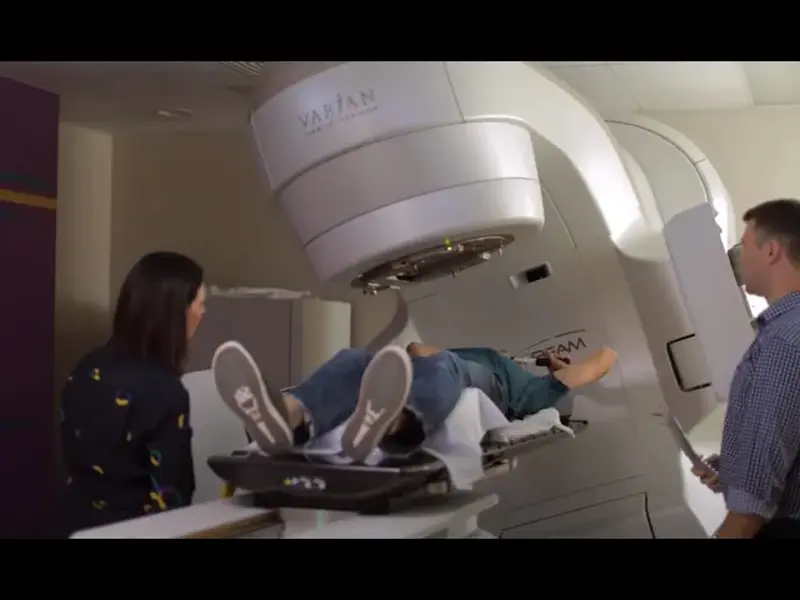
How is radiotherapy delivered?
Radiotherapy treatment can be delivered on its own, or in combination with other forms of treatment, such as chemotherapy, hormone therapy and surgery. It's commonly undertaken as an outpatient service—these are medical services that do not require hospital admission.
At Icon, we use cutting-edge radiotherapy techniques and technology to deliver pinpoint accurate radiation to the tumour. Our technology and expertise allow us to accurately treat all cancer types of various sizes and locations.
How long does radiotherapy treatment take?
Treatment is usually given in daily intervals (Monday to Friday) over several weeks, allowing enough radiation to target cancer cells while providing healthy cells enough time to recuperate. A radiotherapy treatment session may only last 15 to 20 minutes, however you may need to attend other appointments, such as seeing your oncologist.
A single course of radiotherapy is unique to each person and their condition. This includes the site and stage of the disease, type of disease, a person’s age and general health.
What are the side effects of radiotherapy?
Radiotherapy treatment is unique to each person and can affect the body in different ways. The most common side effect is fatigue, a feeling of exhaustion or lack of energy. Some people may also experience bowel or bladder irritation as they progress through treatment.
As radiation is targeted to a specific area of the body, other side effects are often contained to the area being treated. Site-specific effects may include skin irritation (redness, dryness, itching, peeling or blistering), pain, swelling and hair loss in the area being treated.
The below table provides examples of other side effects some people may experience, depending on the area being treated.
Radiotherapy side effect | Treatment site |
|---|---|
Nausea and vomiting | Abdomen |
Difficulty swallowing | Throat or oesophagus |
Loss of taste, dry mouth, oral thrush, mouth ulcers | Head and neck |
Female fertility | Abdomen, pelvis or pituitary gland |
Male fertility | Pelvis or testes |
Erectile function | Pelvis |
How long do side effects last?
Although most radiotherapy side effects are temporary and resolve after treatment has finished, there is a possibility that long-term effects may occur. Your treatment team will discuss the type of side effects you may experience before your treatment begins.
Once you have commenced treatment, it's important to let your treating team know of any effects you notice, and those that are making you uncomfortable. At Icon Cancer Centre, your comfort is a priority; we are always there to help find ways to manage any side effects you experience.
Common radiotherapy techniques
Frequently asked questions
Other helpful resources
Find compassionate, expert cancer care close to home.
Our experienced doctors are here to support you with personalised care and access to the latest treatment options.
If you would like more information, you can send us a message and we will have one of our team come back to you as soon as possible. Alternatively you can contact us directly.

Helpful information

Become a patient
Find out how to become a patient at Bowen Icon Cancer Centre, or request more information.
Make an enquiry
Radiation oncologists
Our team of highly experienced radiation oncologists are here to support you before, during, and after your treatment.
Meet our specialists
Radiotherapy FAQs
Find answers to some of the most common concerns and misconceptions about radiotherapy.
Read FAQs
Starting radiotherapy
We believe in a personal approach to radiotherapy, which means you'll receive a personalised plan tailored to your specific needs.
Find out more